


Cast iron floor track
Contact Info
- Add:, Zip: 061000
- Contact: 谢佳宁
- Tel:15350773479
- Email:3622313939@qq.com
Other Products


How to choose cast iron ground rails and manufacturers of cast iron ground rails?
At high temperatures, the carbon in the molten iron of cast iron ground rails is easily oxidized into CO, so some believe that carbon in the molten iron is also a "gas-forming element." CO has very low solubility in molten iron and, once formed, is released into the atmosphere near the liquid surface. In the production practice of cast iron ground rails, we observe that when high-temperature molten iron is poured into a ladle, radiant sparks (commonly known as "thief sparks") fly out, which may indicate the phenomenon of carbon release due to high-temperature oxidation. During the melting process of molten iron in an electric furnace, it possesses 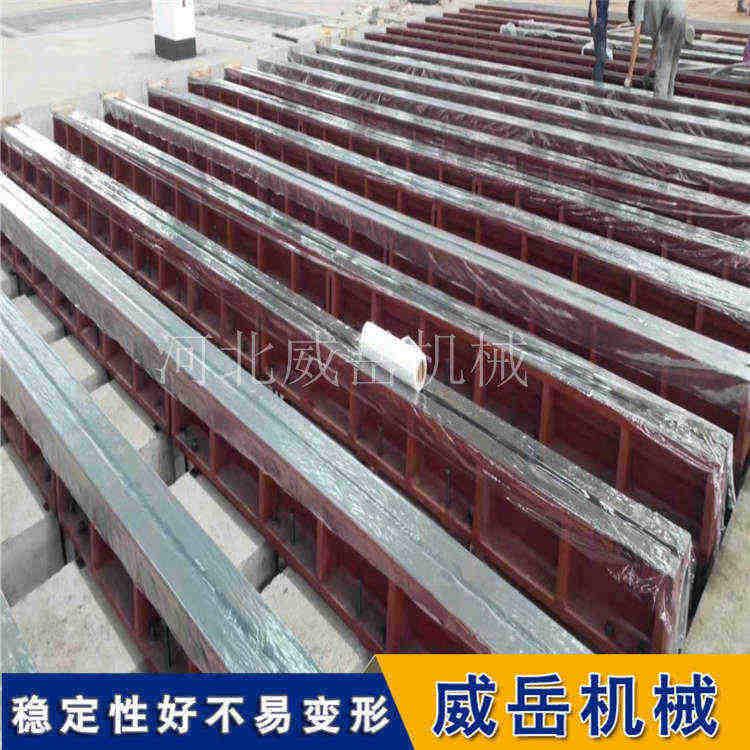 electromagnetic stirring friction properties.
Porosity in cast iron ground rails appears inside or on the surface of castings, with cross-sections that are round, oval, waist-shaped, pear-shaped, or needle-like. These pores can exist in isolation or in clusters. Small pores often appear in groups or scattered distributions. Pores on the surface of castings are called surface pores, while those located just beneath the skin of cast iron ground rails, appearing as scattered waist-shaped pores, are called subcutaneous pores. Needle-like pores inside castings are referred to as internal pores, and clusters of needle-like pores on the surface of castings are called surface pores of cast iron ground rails. The walls of these pores are generally smooth, and porosity often coexists with slag inclusions.
As a special category of coatings, the basic requirements for cast iron ground rail casting coatings are not significantly different from common coatings, primarily considered from three aspects: the coating material, the coating layer, and the coating process. If the high-temperature performance of cast iron ground rails is not considered, general civilian coating researchers can fully understand and engage in the research of this type of coating.
Classification of porosity in cast iron ground rails: Porosity formed in castings due to gas entrapment during the filling process of molten metal, often appearing as isolated round or oval large pores, typically located in the upper or middle parts of the castings. Invasive porosity: Formed by gas invasion from molds, coatings, core supports, or chills into the surface layer of castings, often pear-shaped or oval, with larger sizes and oxidized pore walls.
When the molten iron of cast iron ground rails is superheated to high temperatures for extended periods and subjected to electromagnetic stirring friction, both spontaneous graphite nuclei and foreign crystalline nuclei in the molten iron gradually dissolve into the molten iron or float to the surface, where they are removed with slag-forming agents. This significantly reduces the substances that can serve as foreign nuclei for graphite during eutectic crystallization. Sulfur is a harmful element in cast iron, especially in ductile iron.
The thermal crack resistance of cast iron ground rail coatings refers to the ability of the coating layer to resist cracking and peeling under high-temperature thermal shock. The solid content is calculated based on the amount of coating added and the volatile content of the wet material, using a reference formula. The slurry is applied to the casting sand mold by dipping, brushing, spraying, or flow coating, and the surface of the cast iron ground rail sand mold is observed for drips, accumulated brush marks, or flow marks, with fewer flow marks being preferable.
Some data on cast iron ground rails indicate that increasing sulfur from 0.02 to 0.06 can increase tensile strength by over 50 MPa, effectively raising the grade by one level, and hardness can increase by HB20. Further increasing sulfur to 0.1 results in minimal changes in strength and hardness. Thus, for gray cast iron, it is advisable to control sulfur between 0.06 and 0.1 (our factory produces automotive-quality HT250, with sulfur controlled between 0.07 and 0.09). Additionally, when melting "cast iron chips" in an electric furnace, even if the chips are clean and free of rust, high temperatures and superheating are not required. However, due to electromagnetic stirring friction and the burning loss of carbon and silicon,
The sintering point of cast iron ground rail coatings refers to the temperature at which the surface of refractory filler particles or impurities between particles begins to melt. Methods for determining the sintering point of coatings include the SJY sintering point tester method and the tube furnace sintering method, evaluated using a five-level rating system. The refractoriness of coatings refers to the melting point or softening point of refractory powders in casting coatings, i.e., their ability to withstand high temperatures.
Weiyue Machinery, Ms. Xie 15350773479
| Industry Category | Hardware & Tools/Castings/Iron Castings |
|---|---|
| Product Category | |
| Brand: | 威岳 |
| Spec: | 2000*4000 |
| Origin: | 111309 |


